

The Importance of Youth Inclusion in Local Heritage
Local heritage has a reputation amongst many of my generation (Generation Z that is) as being stale and dominated by those too cut off from the changes in society to truly know how to connect a place’s past to the younger generations. While my own experiences have proven, to me at least, that nothing could be further from the truth, it is telling that this remains one of the prevailing narratives about the individuals and organisations working to preserve and share a place’s past. This presents an acute problem; how do the custodians of local history encourage greater involvement with the cultural and historic environment when they are competing for time and attention with school work, part-time jobs, and the digital world?
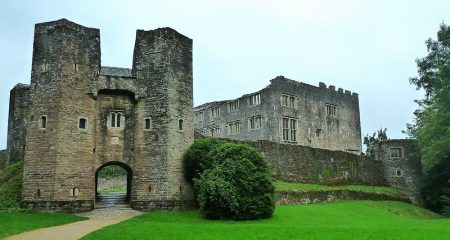
Totnes and its surrounding area are blessed with an abundance of sites and customs of significant cultural, historical, and archaeological value, with a well-developed infrastructure of local groups and organisations to advocate and care for them. One need only look to the presence of national institutions such as English Heritage at Totnes Castle and Berry Pomeroy, alongside the internationally important site of the Dartington Estate (with the recent opening of the Heritage Centre providing an exciting opportunity), the local Totnes Museum, and the wealth of town architecture to see that Totnes is a place with strong connections to its past. And yet even in a place such as this, there are still concerns about the lack of engagement from younger generations.
The benefits that can be enjoyed by all sides through greater engagement cannot be understated. For young people it can help to aid in emotional and cognitive development, with a Historic England report on involvement in the Heritage Sector (2023) finding that participants in the arts were more likely to go on to further education later in life. In addition to this, greater access to the historic environment was shown to lead to stronger place attachments which in turn can help with a sense of identity and improve mental health. In a digital age with fewer and fewer in-person connections, this could be key for the wellbeing of many young people.
However, it is not just the passive interactions with heritage that is important, but also the opportunities that can be provided for young people wishing to enter the heritage sector, such as myself. The cultural and historic fields are notorious for the void of paid placements and work experience opportunities, and thus volunteering in local heritage serves an incredibly important role in fostering the next generation of professionals, providing valuable experience and connections that would overwise be difficult to develop. Trustees form the highest level of volunteer engagement within charities, and yet research conducted by the Charity Commission (2010) found that 18-24-year-olds represent only 0.5% of trustees across England and Wales, despite making up 12% of the adult population, with 80% of them being the sole young trustee on their charity’s board. The reasons behind this will be varied, including a lack of awareness of opportunities, concern about time-commitments, or reluctance by existing board members.

Beyond the lack of representation of younger age groups, access to these kinds of volunteer opportunities can vary between socio-economic groups, with those on lower incomes less likely to be able to afford unpaid volunteer work; which will have a long-term impact on their ability to enter the heritage sector. While addressing the issues of disparate access to volunteer opportunities as a result of financial inequalities will be out of the power of many local heritage organisations, emphasising the importance of young people in the protection and engagement of historic sites and artefacts, along with providing youth-orientated opportunities, could have a transformative impact for many people – although how this is relevant to Totnes will be discussed later.
On the other side of the equation is the benefits that can be enjoyed by the cultural organisations that do provide opportunities for young people. The most potent example will be in the input of ideas and recommendations that could resonate with a wider audience, and thus safeguard them from the threat of declining relevance or interest. As stated previously, generations that have grown up with access to smart phones and social media have greater competition for their time, with the impact that this has on attention spans being widely reported on. While this will provide a great many challenges, there are potential opportunities as well. This is more easily said then done of course, as we have seen that while national institutions such as the BBC and National Trust are capable of utilising digital technology for the enhanced reach it can bring, local organisations can struggle to tap into it. In spite of these challenges, the rewards are well worth the effort, and in a place like Totnes that has a higher median age then the national average, it is particularly important to encourage involvement.
As the case for greater involvement appears overwhelmingly positive, we must now come back to the issue of how to achieve it. National initiatives like English Heritage’s Shout Out Loud (more information here) scheme or the Heritage Fund’s Kick the Dust grant scheme (more information here) will form part of the solution, but it is only through local grassroot actions that most meaningful impacts will be felt. First and foremost would be direct encouragement by groups such as the Totnes Museum, Dartington Trust, and the Totnes Heritage Trust. This could be through setting up volunteer opportunities that are directly targeted at young people, or through opening a place on their trustee boards for a representative of the young community. The Royal Albert Memorial Museum in Exeter has established a Youth Panel to provide input to the way the museum is run, and while the RAMM is on a large scale, something similar could be replicated in Totnes. I have been lucky enough to be appointed to the board of the Totnes Heritage Trust, and even though my stint with them is in its very early stages, I have already been able to get to the very heart of Totnes’s history and made to feel very welcome by the current trustees.
 Another key consideration is the role played by schools. As much of the curriculum is set by national government, there is generally a lack of any interaction between schools and the historic environment, unless independently established. This can have a detrimental impact on people’s understanding of their own local area, so could hamper progression into the heritage sector. This also applies to the entire field of archaeology, with a significant lack of public awareness about what the subject involves or its relevance as a result of it being completely sidelined in the education system. I am an archaeology student, but it was only through independent study that I discovered that I wished to pursue it at university, however I recognise that not everyone will have the same opportunity to involve themselves and potentially pursue it. Totnes Museum and the Totnes Heritage Trust are well placed to establish partnerships with schools to help resolve this, and I am in the process of developing projects that could provide opportunities for people in schools to engage in both local history and archaeology.
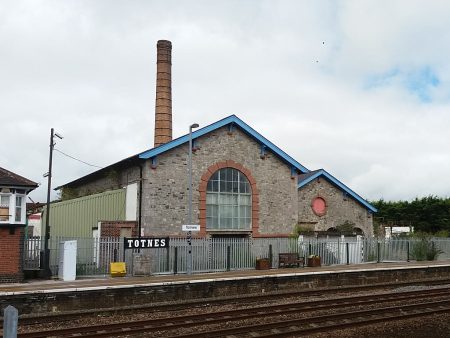
A final point to address, is in the interactions between cultural heritage and natural heritage. Young people are some of the most active in advocacy for nature restoration and climate change, so emphasising the link between protecting the environment and protecting historic sites/buildings could help to demonstrate the interrelated nature of these two important causes. Totnes Heritage Trust is in a prime position to act as a facilitator of these sorts of projects, and can work with other community interest and wildlife groups to encourage the reclamation and reuse of brownfield sites with historic and architectural value, such as the Dairy Crest site – originally a pumping station designed by Isambard Kingdom Brunel.
The relationship between young people and local heritage is one of the most important in the maintenance of our historic environment, and yet also one of the most overlooked. While this situation has been changing over the past few years, there is still much more that should be done by grassroots organisations with the support of national conservation groups and central government, that can only serve to benefit all members of the community, including helping to alleviate some of the issues caused by the much reported on mental health crisis amongst younger generations. The case for opening up opportunities in local heritage to younger people is, in my eyes, irrefutable; and Totnes, with its history of progressive thinking, is ideally suited to push ahead and safeguard its heritage for everyone.