
Unpleasant Land – Fly Tipping in Staverton
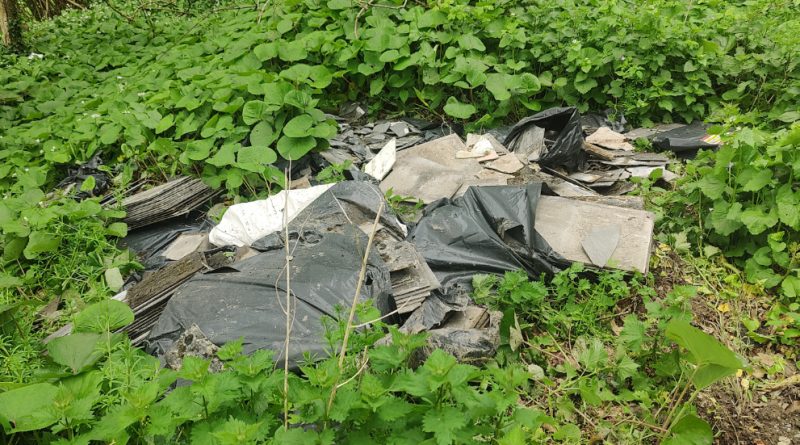
Question – Why would someone dump this pile of what looks like roofing slates on a verge near Staverton?
Answer – Because they know their chance of being caught is virtually zero.
In fact, in 2024-25, South Hams council caught and fined exactly ZERO fly tippers.
This may be because we are all clean, law abiding residents who would never dream of fly-tipping.
And yet – here’s the evidence to the contrary.
Fly tipping cost England Councils 19.3 million pounds in 2024-25 and the problem is on the rise with a national trend that has pushed England’s total incidents to their highest level in years. According to Defra data reported by The Totnes Times, 629 fly‑tipping incidents were recorded in the South Hams in the year to March 2024, up from 556 the previous year — the highest level since comparable local records began in 2019–20. In South Hams, the rate in 2022–23 was 6.2 incidents per 1,000 people, well below the England average but still rising year‑on‑year.
Keep Britain Tidy has urged courts to use their full sentencing powers, including jail time for “professional fly‑tippers”. Closer to home, South Hams District Council says it is adopting a “zero‑tolerance” approach, stressing that fly‑tipping “blights the landscape” and places a financial burden on residents.
The council can fine perpetrators up to £500 with the penalty reducing to £250 if paid within 14 days – the legislation is in the same bracket as graffitti or littering. However due to the severity in this case it is very likely this is hazardous waste.
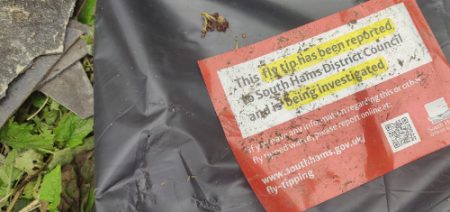
Locals reported it three weeks ago (after the recycling centre re-opened). The council has put a sticker on it.
But it’s still there, and as far as we know, the “owner” is unknown. Under law it is the landowner’s responsibility to clear fly tipped trash on private land. But who owns this grassy verge by the side of the narrow road down to Staverton and the ancient bridge?
If its public land, the council is responsible.
Dartington Councillor Will Webb told the Pulse “What remains in the absence of detecting the criminal is the prosecution of the victim, that being the honest landowner upon who’s land the tipped materials lie. There is all the evidence needed to prosecute the victim if an investigation into the crime is not pursed relentlessly which I believe is what the public would demand if they were aware of this crime. I believe the evidence can be found but perhaps not the will to find it”
Rubbish disposal is big business and criminals are, as we’ve seen across the country, creating giant toxic dumps so shocking and numerous that local authorities are finally taking action.
But even on a much smaller scale like this, fly tipping is potentially dangerous and certainly ugly. A South Hams District Council spokeperson stated “The reported fly‑tipping is currently being investigated and arrangements are in hand for it to be removed by one of our specialist contractors as soon as possible.” but refused to be drawn on the potential costs or if they know of the criminals behind the dumping.
 A new protest group, Clean Up Britain, is running a social media campaign trying to get everybody to care about the state of our countryside and road verges. In a massive piece of investigative journalism which CUB has shared with the Pulse, it asked 382 local councils some simple questions about how many parking fines they issued versus how many fly-tipping fines they issued. And when fly tippers were caught, how many fines went unpaid.
CUB says the results reveal that fly tippers are just not a priority for councils. “The findings reveal a system in which fly-tipping is rarely punished: over half of fines go unpaid and prison sentences are exceptionally rare. Parking generates over 100 times more revenue than fly tipping fines.”
Local authorities can issue on-the-spot fines, often up to £1,000, for smaller-scale incidents. The responses from councils to CUB’s Freedom of Information requests also reveal that more than £9 million could have been raised in fines, had they been imposed and then enforced.
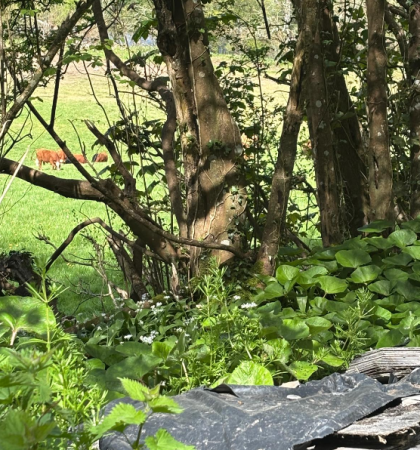
South Hams council in 2024-25 caught no fly tippers and so issued no fines, according to CUB’s research. Yet someone – probably the council – will end up paying to remove this casually discarded pile disfiguring a beautiful verge overlooking fields where cows are grazing.
And that costs all of us.
The legislation regarding who has to pay is an arse, why should a law abiding landowner pay for some dirtbag’s dumping of waste, it may be a situation where the original flytipping get moved on so that the landowner is not responsible for the costs
As to the situation where SHams has not prosecuted is probably because the cant be bothered to get out and investigate fully other than to stick a lable on it.