
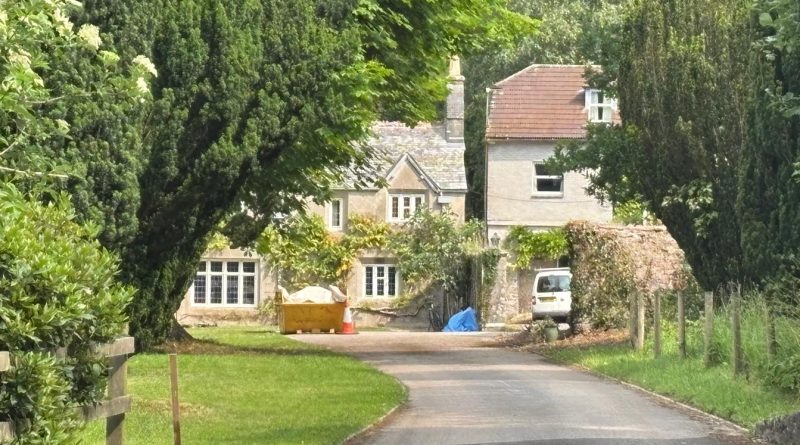
What has happened to Schmacher College
Things seem to have gone pretty quiet over at Schumacher College. Given that I worked there for over a decade from 2012 onwards, I am fielding a good number of enquiries about the current status and future plans for the college. In truth, however, I find myself generally only marginally better informed than my interlocutors – indeed, sometimes even less so. What better excuse than to seek out the College’s Head of Learning, Mona Nasseri, for a long, convivial chat.
Turns out that the last several years since the financial crisis at the Dartington Trust that spelled the end of its relationship with the college have been rich in reflection and experimentation, opening up potential for re-orientation and relaunch of the college.
 Perhaps the most visible activity over the last year has been the Schumacher Wild programme. The name emerged during a period when the college did not yet have legal permission to use the Schumacher College name, and also reflected a new phase of working beyond the organisational constraints of Dartington Hall Trust. Through Schumacher Wild, the college experimented with a nomadic model of holistic ecological education. Working with partner organisations across Devon and elsewhere in the UK, as well as in Estonia, Greece, the Netherlands, France, Brazil and Japan, a series of courses were co-designed and convened. These programmes provided an opportunity to explore new place-based approaches to learning while also creating an international conversation about the future of holistic ecological education and the college’s potential role within it.
how were the new ideas to gain exposure?
Funding was secured to enable a small team to develop and deliver a number of new learning programmes keeping the college’s profile visible and building new relationships with a range of partner organisations. In parallel, the Satish Kumar Foundation was created as the college’s legal entity and various possible venues in South Devon for a re-launched Schumacher College were scoped out.
Foremost among the insights generated in this consultative process is just how different is the world today from that in which the college was created. The task, it quickly became clear, was not simply to resurrect the model of the college as it had been, but rather to be finely attuned to the emerging challenges and opportunities offered by the new educational context.
A little more on this shifting context. The last couple of decades of the 20th century witnessed an explosion of interest in holistic science and deep ecology, fields that have come to be called ‘earth system science’ and that were at the heart of the college’s philosophy from the outset. A new wave of thought-leaders – people of the stature of James Lovelock, Fritjof Capra, Vandana Shiva, Satish himself (among many others!) – were finding their voice at a moment when interest in ecology was spilling out of the academy into the realm of political activism.
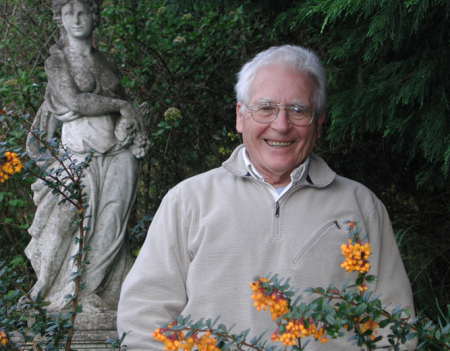
But in the absence of the internet and marginalised by a disinterested or hostile media, how were the new ideas to gain exposure? For those hungry for the new thinking, there was little choice but to come to one of the relatively small number radical venues that provided a platform for it. Schumacher College was one such – In fact, it may not be an exaggeration to say that it was among the leaders in the field internationally. The place was abuzz with excitement and creativity. Around the tables in the dining room at meal-times, one might find groups of excited students clustered around the likes of Helena Norberg-Hodge, Jonathan Porritt or Iain McGilchrist. The profile of both the emerging generation of cultural icons and that of the college rose reciprocally; the one helped to raise the profile and reputation of the other. Those who came to study at the college were generally happy to ‘sit at the feet of the masters’. The college’s first educational offering was a 5-week teach-in with James Lovelock. (Hard to imagine many people in our busy, digital age who would be able to carve out a 5-week block for an immersion experience of this type!)
Much has changed over the intervening years. A new wave of thought-leaders is emerging – people like Jason Hickel (de-growth), Kate Raworth (Donut economics), Andreas Weber (sacred biology). All of these have a bond of affection with the College and for many, the time they spent here was important in the development of their own thinking. However, they are all now easily accessible via the internet or in residence at the many other training centres that have evolved.
In parallel, the severity and immediacy of the crises converging on our societies is hitting home, stimulating enhanced demand for applied research and solutions directly relevant to people’s home places.
Finally, we are witnessing a wave of pedagogical innovation. Students generally have less appetite for sitting at the feet of the masters, preferring a more participatory and embodied style of learning.
These insights are feeding back into the revisioning and reorientation of the college as it moves forward. These could be described as representing a subtle, qualitative change of emphasis rather than a seismic shift. At the heart of the vision is the concept of ‘Practice in Place’ – a holistic and transdisciplinary approach that sees the land itself as an essential research partner. There are echoes here of the early years at Dartington, where education was to so permeate everything that some of the early pioneers saw no need for there to be a designated learning space. While there will be a theoretical dimension to Schumacher’s curricula, the aim is to create an educational model that is firmly rooted in the specificity of the Dart watershed.
A new wave of thought-leaders is emerging
The locally networked nature of the emerging vision also finds expression in the proposed accreditation system. Here, it is proposed that the college will be one of four partners in the English Southwest working collaboratively, with students free to undertake modules offered by any of the four participating organisations and moving freely between them. The vision brings to mind the saying of the wise elder American philosopher/poet, Wendell Berry: ‘You can only stand up for what you stand on!’
A preferred venue – a 80-acre land near Buckfastleigh – has been identified and fund-raising has so far been encouraging. However, a funding gap remains and decisions on the part of several potential donors are imminent.
Exciting days ahead as the college seeks to pioneer a new model of education fit for the purposes of the 21st century.