
Food for Thought
 A simple idea rooted in South Devon soil is expanding into a unique food hub which will save hundreds of tons of crops from going to waste and support families in need.
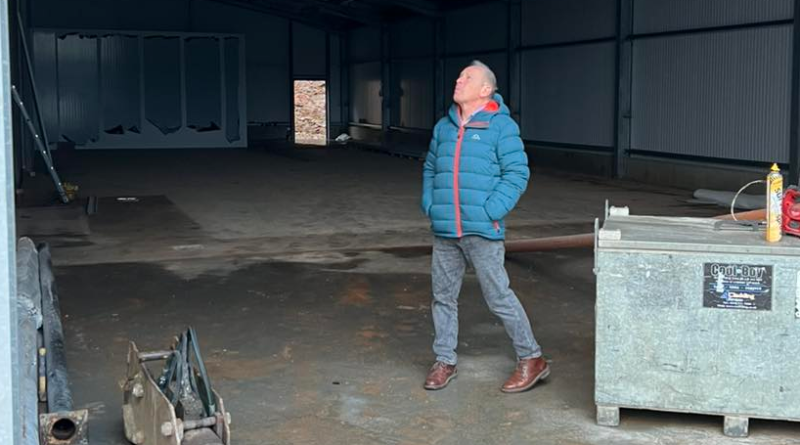
Last week I had an exclusive look around the new HQ of Food in Community, which was given a £1.58 million Government grant to set up a processing unit.
Just two miles outside Totnes off the road to Paignton, FIC has taken on 10,000 square feet of warehousing. Inside are gleaming metal tippers, peelers, washers and conveyors which will take spuds and root veg from muddy and knobbly to clean and processed – all in 24 to 48 hours from the field.
David Markson is one of the founders of FIC. “We have been dreaming of this for a number of years,” he told me inside the cavernous and chilly warehouse. Co-founder Chantelle Norton explained that their network of organic farmers will supply the veg and it will be sold to wholesalers and the public sector, so making money for FIC to continue its other, original, role of giving free organic food to people who need it. It supplies community fridges, veg boxes and holds regular “pay what you can” lunches in Totnes. Teams of volunteer gleaners also go into fields to harvest fruit left in fields (see Pulse article here).
Born from a concern to build local supply chain resilience, FIC can, when this hub is running, even out the peaks and troughs of farming, so helping farmers sell their caulis and spuds, beetroots and carrots which might otherwise have been rejected by supermarkets and so ploughed back into the land. Around 500 tons of food a year will be rescued, David estimates.
Claire Davis, FIC’s operations director, is in charge of the hub project. She has years of experience working with producers and processors such as St Ivel, Riverford, Tideford and Clive’s Pies. “The machinery has only just been installed and so has to be trialled before any veg can roll off the production line,” she said, clearly thrilled with the state of the art equipment.
We have been dreaming of this for a number of years
She revealed two challenges emerged during the hub’s birth, neither of which had been included in the Defra grant. One was the lack of a connection to the mains drainage for effluent and the other was the discovery that the electricity supply hadn’t been designed for such a lot of machinery. “So we had to upgrade the power supply and we are looking at ways of cleaning our water,” she said. The grant money had to be juggled to fit Defra’s guidelines but it was, she said, very supportive.
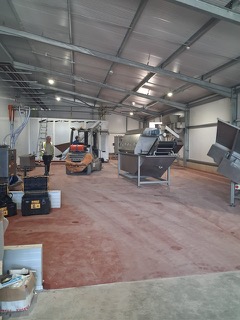
She gave me a quick tour round the Wallace and Gromit-style lay out of hoppers and washers which snake round and through the wall, going from the “dirty side” to the “clean side” where the veg will be chopped, packed and either frozen or dispatched. Veg sorters will eyeball spuds which need a final tidy up by hand. All the peelings generated will be pressed into bricks for animal feed or fertiliser and even the starch from the washing water will be processed (although I’m not sure into what, but some snacks are made from potato starch).
It’s an impressive operation which has taken just ten months to get this far. Inevitably, they need more money before sales kick in. Overheads are running at £20,000 a month, David said, so they are hoping that their crowdfunding appeal will raise a decent amount. The target is £100,000. Crowdfunder link here
Once the conveyor belts are rolling full time around ten people will be employed. The location – the South Devon Food Hub (www.southdevonfoodhub.co.uk ) is ideal, as all the businesses meet once a month for support and advice. “One of our motivations has been to give back to the generous local farmers who have supported us over the years,” Chantelle said. “Farmers are struggling and we felt it important to give back in some way.”
I’m confused. As I understand it, this unit will be producing frozen potatoes and frozen carrots made from veg bought from Riverford Organics. Potatoes and carrots can be stored in normal cold stores for a year-round supply. So how is this helping farmers (apart from Riverford)? And how can all the 1.5 million spent on this be justified whena cold store would achieve the same for much less cost? I think there is some misleading info being given out by food in the community.
I think there’s a misunderstanding about what this unit is for. It’s not just about storing vegetables. A cold store only delays spoilage, it doesn’t deal with the fact that large amounts of perfectly edible produce are wasted every year because they don’t meet fresh retail standards.
This facility is about processing that surplus and “out‑of‑spec” produce into frozen products, giving it a longer life in a usable form and creating value from food that would otherwise be lost. That directly benefits growers by providing an outlet for produce they currently struggle to sell.
The £1.5M investment isn’t for basic storage, it covers processing, freezing, packaging, and creating a local asset that supports waste reduction and a more resilient food system.
So this isn’t something a cold store would achieve, it’s solving a different, much bigger problem.