
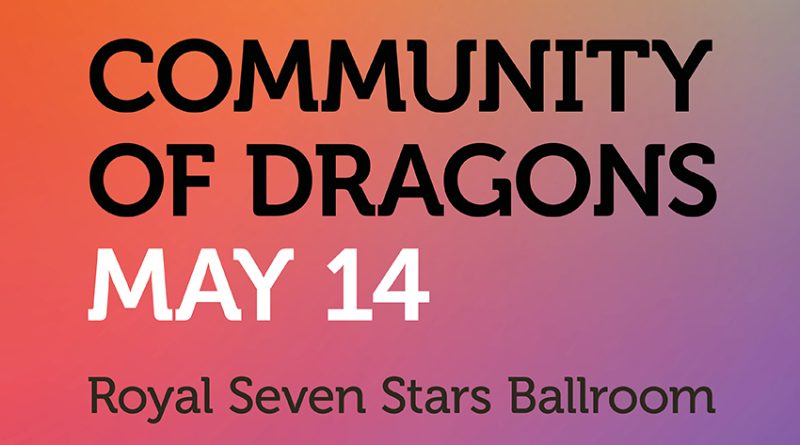
What is the Community of Dragons?
Low cost, light touch, high trust. This is my organising mantra, at least within networks and in my local/regional work. It creates fertile soil for innovation, i.e. somehow figuring out how to do it anyway. What happens when the funding is pulled or runs out? If ‘systems change’ can’t work with minimal resources, then ‘it’ is vulnerable to philanthropic distraction when the next bright shiny thing comes into view. Vulnerable in other ways, too. (Some of what does get funded leaves me scratching my head.) So why not start with a ‘socio-economic aikido’ attitude to begin with? What can we do in these circumstances as they are, working with the assets, energies, relationships at play? This seems a fruitful path for bringing about enduring change in the culture, communities, and economics of places. Don’t try too hard. Make little effort.
‘Don’t try too hard. Make little effort’ – let’s set that aside for a moment. I’m interested in bottom-up, citizen-led processes for change, so I try to attune myself to what’s possible in a place, the people, my relationships, others’ relationships. Big, splashy, well-funded projects sometimes do a lot of good, of course. Maybe more than I suppose. But that’s not where I’d begin. Place-based transformation of the kind I think we need in these times – resilient local and regional socio-economic relationships that absorb shocks, increase community income and financial security, and create an abundance of ways in which people can meet their needs – is ultimately dependent upon the people who inhabit and animate the place.
 Perhaps the people must be transformed, too. Or rather, we the people have an opportunity to step into our roles as citizens, in the broadest, deepest sense. We exist. Our particular kind of organism is endowed with an inherent right to pursue and develop health and wellbeing for ourselves, our families, and our communities. This includes working with others toward these ends. A community stocked with such folk, exercising their agency based on that foundation, would have the wherewithal to initiate, govern, and sustainably reproduce the sort of holistic transformation of place suggested above. Turning Plato on his head – philosopher citizens instead of philosopher kings. Perhaps equally utopian.
The story of the Local Entrepreneur Forum & Community of Dragons, at least in this telling, illustrates what I’m talking about. First, a little background. We started in 2011. We had failed to get the hoped-for funding for an incubator project. The ‘we’ in this case was a handful of us involved in Transition Town Totnes and our new ‘theme group’, the Totnes Reconomy Project. Failing forward, so to speak, we sketched out an idea for an ‘incubator in one day’ that included speakers, unconference, pitching, and investing. Many conversations ensued. We were off.
We’re about to run our 14th one. So far, 55 pro-social/pro-ecology ventures have pitched and received support from members of the community – hundreds of them – who have made well over a thousand offers of funding, expertise, labour, introduction and access to networks, homemade cakes and heartful hugs. Those who have pitched turn around and invest in others. Some are now co-organisers. This year we have 15 expressions of interest – promising enterprises applying to pitch, including a few that would contribute significantly to our food system. Our process includes talking with everyone, doing a little due diligence, offering some coaching, sometimes more hands-on engagement, so we have probably met with another 60 or 70 local entrepreneurs who have been through part of our process over the years.
A network of diverse relationships has emerged naturally from all of these conversations – those entrepreneurs, myself and a few collaborators with enterprise experience, lots of other interesting people with life experience, expertise, and good will. The way we’ve been organising these events over the last many years is by getting in touch with a few of these folks to get things rolling. Word travels around that ‘it’s that time again’ and prospective pitchers begin emerging. Hal and I have been hosting, so we find a date when we’re both available and book the Seven Stars. Gillian at LeftBridge designs the posters. Scott at Reconnect Magazine writes an article. John, Emma, Matt, Bob, and I meet with prospective pitchers. Guy and Transition Town Totnes add their support. We and a few more people meet to select, coach, rehearse, do the event – we make it fun. Sounds like a lot, but everyone chips in some of their time. Often we’re bumping into more friends who can contribute a little something, too. Sound equipment, video and photo documentation, delicious finger food. It has become a beautiful expression of conviviality, powered by relationships with minimal effort. There’s no burnout and very little budget. Overall, we spend only a few hundred pounds.
This convivial state of affairs didn’t just happen, but developed over the years just as the organising of this event has become a shared practice. There are ample opportunities to cross paths, have a chat, and find common cause with people in this small town – that’s an advantage. But years of Transition organising, the impact of Schumacher College, and over the past 10+ years, the increasing number of pro-social, pro-ecology initiatives clustering here, have resulted in a ‘cultural vibe’ that motivates even more people to participate in the life of this place. And among all of these people are those who see this activity not as ‘volunteering’ but as their activism, helping to bring into being a resilient, inclusive, ecological, flourishing state of affairs. As a practice, it is evident in the patterns that take shape in the timing, content, flow of the event planning and its implementation. It also shows up in the conversations and chance encounters that happen throughout the year. It’s still a fun, climactic event but it’s also part of an annual rhythm and a year-long dynamic.
 We can think of this conviviality extending to many of the collaborations between enterprises that have emerged easily. A famous example is from our very first event. That year, Rob pitched the New Lion Brewery and promised to host the afterparty the next year. GroCycle also pitched a new urban mushroom farm. In the meantime, Rob and the brewery team wondered if GroCycle could grow oyster mushrooms on the brewery waste. They could and they did. Then the brewers wondered if they could make a delicious stout with those oyster mushrooms. They could and they did, making the locally famous Oyster Stout – ‘the circular economy in glass’, as Rob quipped. In the following years, Rob would ‘invest’ a specialty brew with whatever people were pitching – oats from Grown in Totnes or nettles foraged by Wild and Curious. This kind of thing happens almost all the time.
Sometimes these collaborations are examples of failing forward. Not every enterprise makes it. This is part of the innovation process – iteration, productive failure, reorganising the nutrients, so to speak. Holly started Grown in Totnes (GiT) to fill a niche in the local food system while adding to its resilience. She pitched in 2015. Alongside the support they received from the community, they also secured a sizable grant from a large foundation. They invested thousands in milling and processing equipment and worked with local growers, including the late and legendary Marina O’Connell, co-founder of the Apricot Centre. They tried to grow oats for human consumption (unheard of in Devon), then heritage wheat, which GiT would then process, mill, and sell. After a few hard lessons, they eventually ran out of runway and faced imminent closure. They called on their community and over 60 people showed up to help figure out what they could do – at the very least, how they might leave behind fertile soil for whatever could take root in its place. As it happened, Apricot joined with another farmer and a well-loved local baker – all part of the GiT value chain – to found Dartington Mill CIC, acquire their assets, and implement a field to loaf business model. Dartington Mill pitched in 2019 and they’re still going.
Over the years, our little collectivity has grown into something nurturing and worthwhile. It enriches my life and the lives of my friends. This collective enterprise has also become part of the cultural fabric of this town, I think. We haven’t tried too hard and we’ve made the least effort possible. I think this makes it open and easy to sustain. Is this ‘minimum viable systems change’?
This is how I like to work. I’ve tried to apply the insights of phenomenology since my university days, as well as my understanding of complexity and networks – imperfectly, for sure, but they have helped shape me as a person and how I go about my work, whatever it is. For the last many years, I’ve come to understand this emerging phenomena – our collective, the event, the ongoing practice – through these lenses. On the one hand it’s an approach or an attitude, informed by a little philosophical inquiry. On the other, it’s a practice that enables people to exercise their agency for the common good.
As an approach to building relationships, reading the field, anticipating adjacent possibilities, and then reflecting, questioning, making sense, engaging one’s own perceptual capabilities, phenomenological inquiry is useful. It’s personally fulfilling, too – at least, for me. I would propose that any sort of community organising would benefit from philosophical inquiry from whatever wisdom tradition.

A few more words about phenomenology. It’s been part of Schumacher College for decades. It has inspired my friend and colleague, Dr. Emma Kidd, who in turn has inspired me and deepened my understanding. She’s a student of Henri Bortoft. We also studied the work of Allan Kaplan and Sue Davidoff. Their essay, ‘Delicate Activism – a phenomenological approach to change’ (2014) was assigned reading in our economics course and Allan was a frequent guest, usually at the beginning of our course. Jonathan Dawson, former head of the economics programme, gets credit for that. The essay is deep, insightful, and eloquent – and so are they. In the year-long conversation that was our course, their perspectives were frequently referenced and elaborated. Many dissertations cited it. Rereading it now, I see that it has influenced me in wonderful ways, too.
Here’s a brief passage:
“A delicate activism is truly radical in that it is aware of itself, and understands that its way of seeing is the change it wants to see…
“Activists begin by questioning many of the norms which have come to characterize their social world, yet often end up endorsing one of the most normative current practices in our culture – the tendency towards management. The tendency to set objectives, to strategize, to construct elaborate plans, to focus on the shortest way to quantifiable results, to hold to a center, to insist on bureaucratic forms of accountability.
“…it is something that contradicts the essential activist project of freedom, responsibility and consciousness. When we ignore the demand for reflection, when we become emphatic about the rightness of our cause, and when we impose too mechanistic and too facile a frame onto the flow of human process and endeavor, then our project becomes an instrumental project that diminishes rather than enhances the possibilities of what it means to be human.”
They make a case for ‘delicate activism’ as an alternative to ‘management’, which might spark further inquiry and debate. I like their spirit. And there may be many more ways to understand and practice relational organising than these two. The pluralist’s conceptual toolbox would include many approaches.
Let’s turn from the philosophical attitude to the other part of the story illustrated above – the Local Entrepreneur Forum & Community of Dragons as a practice for enabling people to exercise their agency for the common good. I think this is what it does for most participants – entrepreneurs, investors, collaborators, supporters of all kinds. We like to say it offers a platform for mobilizing financial and social capital, as well as knowhow. It does more than that. Platform as invitation to another way of being, perhaps. But people pick up the invitation and participate.

Through this participation we learn more about our collective concerns and desires. The event is a forum of people gathered to support the kind of economy that addresses these concerns and desires, so participants express them, in person and in front of their fellow citizens. This makes our forum a tiny public square. Many of these concerns don’t fit the default economics-as-usual categories. Rather, these concerns come from a whole, lived experience, and though not necessarily articulated in this way, are ultimately about living well together in a community that aspires to recognise everyone as whole persons. That’s my interpretation, anyway. But in the end, this isn’t a design problem. Rather, it’s something that gets worked out through collective processes like this. It calls for more than economics, narrowly defined. It requires something holistic, transdisciplinary, participatory.
Our collective capacities and talents are also revealed – and what we’re prepared to put on the line. Hospitality, reciprocity, generosity, and care for the common good emerge and grow in this medium. In fact, they renew the fertility of this social soil year after year. I’ve used the word ‘conviviality’ many times already. Surely all of this is aligned with the kind of conviviality that Illich advocated, and that Degrowth thinkers have picked up and integrated with their proposals. People coming together to figure out how to create and reproduce their own just and ecological prosperity. Or at least, exercise their agency toward that end.
This annual practice brings tangible benefits, too, contributing another layer to our local and regional economic resilience, something creative that goes beyond talk of ‘provisioning’ or ‘the foundational economy’. It provides an open pathway for a diversity of local entrepreneurs, enterprises, and the whole community to become part of a civic process oriented toward creating the future together.
I’ve shared our story, told from my perspective. For sure there will be other ways to understand what we’ve been doing together here. It’s working and could work elsewhere, both what we are doing and how we are doing it. It isn’t the only way, of course. This is just one story among maybe millions of others around the world, of people inhabiting their roles as citizens of this earth and their place in it, coming together in common cause for the common good. My friends Mel, Ana, and the UMMA network in Brazil may be a good example. Cooperation Jackson might be another. Cienture Aliment Terre Leigoise, as well. And Cargonomia in Budapest. Perhaps many farmers markets have similar stories, such as Crystal Palace Food Market or EcoFeira in Granja Viana. Wherever these kinds of things are happening, they point toward a reimagined and reanimated civic life from which greater possibilities emerge for the kinds of transformation called for in these times.
This article was re-published with permission from a Substack post by Jay here
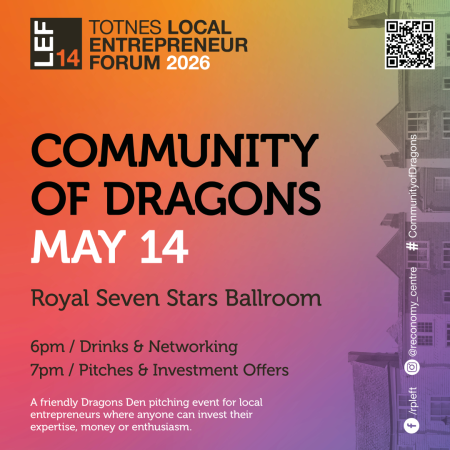
For tickets to the The Seven Stars event on May 14th click here