

Part 1: “Conflict of interest” claim over pay deal adds to Dartington strains
 Dartington Hall Trust is facing new pressures after accusations from a former trustee that the charity’s chair engineered a favourable pay deal for a long-time business contact.
The allegations focus on politician-turned-banker Lord David Triesman – who took over as Dartington’s chair in March 2023 – and David Buchler, a restructuring expert Triesman brought in as an adviser after the trust plunged into financial crisis last year.
I do believe this was a conflict of interest

Former trustee Glenn Woodcock says in a statement he regarded Triesman’s role in setting Buchler’s terms of engagement and remuneration was “concerning given their previous acquaintance. …. I do believe this was a conflict of interest”. The assertions are in a document Woodcock sent to the trust shortly after he resigned in October. The statement has come to light recently and has been seen by Totnes Pulse.
Rules
Under charity law, trustees are responsible for setting the organisation’s strategy and resolving conflicts. Within the trustee board Woodcock had for some time pressed for Dartington to take tighter control of its finances. However his statement indicates he felt Triesman and Buchler were in effect bypassing the rest of the board by having too big a say on decisions, especially over Buchler’s pay.
“It became apparent that the terms on which David Buchler was appointed as an advisor had not been fully negotiated before engagement,” according to Woodcock’s statement.
“I felt I could not continue in a setting where decisions impacting the trust are being made without appropriate board engagement, creating an environment in which I felt I could no longer carry a statutory responsibility.” Woodcock says in the document. The Devon-based entrepreneur and venture capitalist had joined the board of trustees in late 2019. Woodcock’s statement contains other assertions about the charity’s recent stewardship, including its treatment of a senior employee who quit after complaints about improper behaviour [separate story].
Another person with close knowledge of Dartington’s deliberations said: “I shared some of [Woodcock’s] thoughts about standards of governance [in 2023]. I felt uneasy about what was happening.”
After an initial “understanding” that Buchler was to be paid a “small [basic] fee” with an added “success fee” or bonus, Woodcock says in his statement that after discovering more detail, he “did not consider the [basic] fee to be small” while he also “raised concerns about the determination of the success fee”.
Saving the Estate
Dartington’s crisis measures – many of them based on ideas from Buchler – have included large cuts in costs. They have been accompanied by a big reduction in the trust’s workforce, from 360 last summer to about 200. The measures seem to be working, the trust says, with the institution – which last year said it was close to insolvency – on course for monthly losses to end by around December this year.
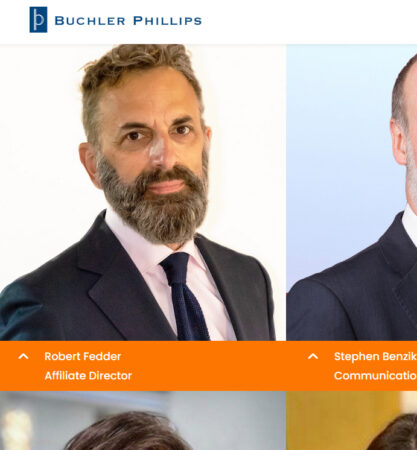
Robert Fedder, Dartington’s interim chief executive, said Buchler’s appointment was appropriate, given both his good reputation in similar situations, and the extent of the trust’s financial problems.
Fedder said: “The intellectual resources he [Buchler] has brought have been invaluable, in areas such as how to deal with creditors, developing mitigating strategies to minimise potential losses, and looking at income opportunities…If I had been a trustee I would have welcomed such a person providing guidance at a very difficult time. Whether Mr Buchler’s influence was greater than that of anyone else is a subjective point.”
Highly Respected
The trust is among the UK’s most renowned charities and runs the historic Dartington Hall, plus much of the surrounding countryside, near Totnes. Based on a medieval estate, the hall and much of its land were purchased in 1925 by the wealthy US-based benefactors Dorothy and Leonard Elmhirst to act as a centre for ambitious projects in arts, education and environmental stewardship.
Writer and philosopher Aldous Huxley described Dartington in the 1960s as “one of the few places in the bedevilled world where one can feel almost unequivocally optimistic “.
He was considered quite a catch,
Enthusiasm

Triesman’s agreement in late 2022 to become the chair of Dartington’s board of trustees was greeted enthusiastically by the trust. “He was considered quite a catch,” said one Dartington insider.
The peer is a former general secretary of the Labour party and a former chairman of the Football Association, the governing body for English soccer. A one-time university lecturer who held ministerial roles during Tony Blair’s 1997-2007 government, Triesman is a director of the London-based Salamanca investment bank, responsible for new business projects. He is especially keen on commercial undertakings involving carbon-free energy and other “green” projects – ideas close to the Dartington ethos.
Financial Difficulties
Soon after Triesman took over as Dartington chair, he shocked the organisation by telling colleagues the trust’s financial position was much worse than most outsiders suspected, and that crisis measures were needed to stave off bankruptcy. To help on a rescue plan, Triesman called in as a key adviser Buchler, the head of the high-profile “restructuring” firm Buchler Phillips. The two men knew each other from business and sporting contacts and have served together on several company boards. In a 2016 court case, Triesman acted for Buchler as a character witness.

Both are closely associated with top London football club Tottenham Hotspur where Buchler is a former vice-chairman. Buchler is a big music fan who has his own opera website and was for a decade the deputy chairman of English National Opera.
Fedder said there had been no “obfuscation” about the size of either Fedder’s basic fee or the bonus. From around June last year, Fedder said Buchler was paid a basic retainer for several months at a rate reflecting his expertise but which was a lot lower than his normal fees.
While these regular payments have stopped, Fedder said Buchler has periodically issued “the trust with invoices ….for occasional pieces of work”.
The Success Fee
On the success fee, Fedder said the basis for the payment was agreed by the trust’s audit and risk committee, comprising Triesman and two other trustees. Fedder said that since the threshold for this payment – that the trust had avoided off bankruptcy – had been reached Buchler would now be paid the bonus. But “to help the trust over cash flow, Mr Buchler has agreed to spread his bonus payments over a period”. The total payments to Buchler have not been disclosed.
Support for Robert Fedder
Fedder took over as the top manager at Dartington last summer following a recommendation from Buchler with whom he has worked as an “affiliate director” at Buchler Phillips. The link does not involve direct payment from Buchler’s company Fedder has said. Woodcock says in his statement he supported Fedder’s appointment.
Kevin Lucas, of the Manchester-based insolvency adviser Lucas Ross, said: “It is generally considered good practice by charities for there to be open discussion by all board members of key matters central to the charity’s activities. I find it surprising that it is alleged this has not happened here.” A former board member at the Charity Commission, the government regulator for charities said Woodcock’s statement painted a picture of “an apparent over-weening …style of [Triesman’s] chairing the charity” and behaviour over governance that “exposes the charity to serious reputational risk”.
Another charity expert was more supportive of Dartington’s decision to appoint Buchler, saying he brought “gravitas and experience” and would have been expected to provide valuable ideas. However this person said – given the importance of Buchler’s role and the extent of the trust’s financial problems – he would have expected the terms of his appointment to have been thoroughly discussed by the full board of trustees before any decisions.
Triesman and Buchler did not respond to requests to comment. Other Dartington trustees apart from Triesman also failed to respond to such requests, or declined.
Six Trustees
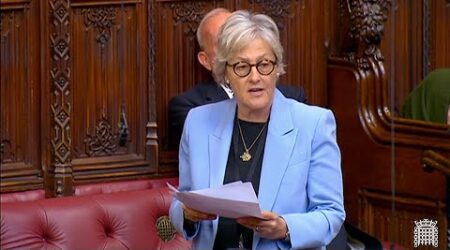
Dartington has six trustees including Triesman, with the newest board member being Conservative peer Baroness Amanda Sater, appointed in late May 2024. Sater is a tennis fan and magistrate who has worked in marketing and is a director of Cape Wiluna, a Kingsbridge-based property company.
As in most other charities, no Dartington trustee receives a salary although they may claim expenses.