“It’s a full-body MOT – through your feet!”:
5 things our intrepid reporter learned having reflexology

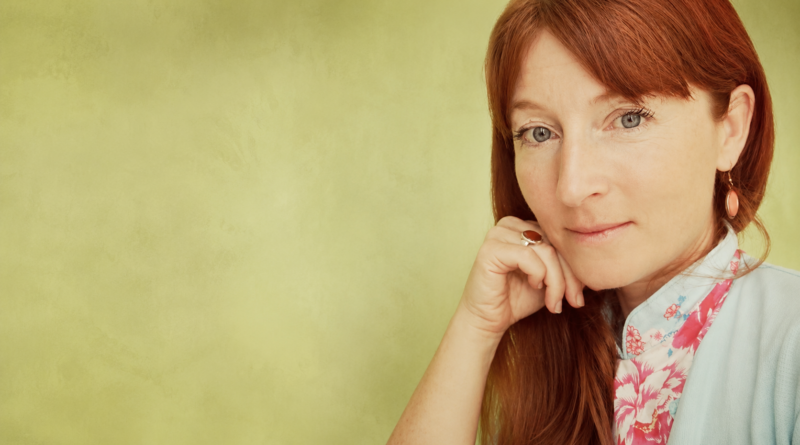
I half expect a scented candle footrub. Instead, clinical reflexologist Sarah Jane Holt correctly identifies my bad back, tinnitus and a painful post-cruise oesophagus – all through my feet. “You’re not relaxed at all, are you?” Five minutes into my first reflexology treatment, Sarah Holt, Totnes-based Director of The Devon School of Clinical Reflexology, has already seen right through me.
I’m lying in a chair, shoes off, notebook abandoned, while my daughter Flo plays nearby under strict instructions to remain quiet in exchange for an ice cream. I know almost nothing about reflexology. I assume it involves gentle foot rubbing, relaxing music and perhaps a little light snoozing.
Sarah has other ideas.
1/ “It’s like a really good MOT”
The claim is that Reflexology works with a map of the body laid out across the feet although this is not scientifically proven. Neck, spleen, abdomen, spine, pelvis. You name it. By pressing different points, Sarah looks for areas that feel tight, tender or, in reflexology language, “congested”.
She cannot diagnose medical conditions – reflexologists are not doctors – but she says she can identify areas that appear to be holding tension. In my case, the list soon includes my neck, shoulders, lower back, ears, sinuses, colon and oesophagus. Sarah finds a particularly painful point associated with my lower spine and asks whether I have injured it. Years ago, I damaged my back helping a friend move a tree, in what remains one of the least dignified physical feats of my adult life. She presses again. I jump.
“L5, definitely,” she says thoughtfully.
2/ “Real reflexology isn’t necessarily nice”
This isn’t the fluffy spa treatment I expected. Some bits feel wonderful. Some distinctly do not.
“A lot of reflexology is taught as a nice, relaxing experience,” Sarah says. “You might go to sleep, and people are happy to pay for that. But that’s not real reflexology.” Her approach is what she calls clinical reflexology – targeted, thorough and based on what reflexology’s modern pioneers describe as “authoritative pressure”.
In other words, she does not glide politely past the bit that hurts. She finds it and works on it. Sarah calls her method “a compassionate version of the Chinese approach”, where treatments can involve considerably harder pressure and even wooden sticks. Mine does not involve sticks. It does involve several moments of involuntary facial expression.

3/ “Reflexologist is just a catalyst”
Here is the big thing I misunderstood on the way in. The idea is not that pressing my foot magically repairs my back from a distance. No mysterious healing force is being beamed through my big toe. “It’s all about your body healing itself,” Sarah says. “The reflexologist is just the catalyst.” The feet contain thousands of nerve endings and sit at the furthest reaches of the peripheral nervous system. Sarah’s claim is that stimulating a particular reflex sends sensory information back to the brain.
“It’s sending messages to your brain, so your brain responds to that information,” she asserts. “Then your immune system takes over.”
That’s the clever bit. This explanation says that the reflexologist supplies a stimulus. The brain receives it. Your body’s own systems do the work. The apparent “magic” is really in the knowledge – understanding which part of the foot to stimulate in order to draw the body’s attention towards somewhere that may have been tense, painful or quietly ignored for years.
She says the body does the fixing. Sarah just knows which doorbell to ring. She repeatedly returns to the point associated with my old back injury. At first, it feels crunchy and acutely tender. She works it, moves away, then tries again. Each time, it hurts less. She presses the point associated with my ears. I have had tinnitus since my band days. She moves to my oesophagus. I have recently returned from an all-inclusive cruise with my first serious bout of acid reflux.
This is getting (annoyingly) interesting. Sarah has plenty of stories like this. She tells me about a London client who’d spent years trying to resolve chronic neck pain and reported it gone after one treatment. A local professional guitarist in his 60s took longer. After decades of practising for up to five hours a day, his shoulder trouble was firmly established. On the seventh treatment, Sarah says, something released in his deltoid muscle and he felt immediate relief. Regular reflexology now helps him keep him playing.
These are individual client experiences, they are not clinical trials. But the contrast is interesting – some problems appear to respond quickly; years of repetitive strain may take considerably longer.
4/ “I was taught by my mum”
Sarah didn’t discover reflexology during a weekend wellness course. Her mother began practising in the early 1980s, when modern reflexology was still relatively new in Britain, and became a pioneer in reproductive reflexology and fertility. “I grew up with reflexology in the background,” Sarah says. “I was taught by my mum.”
Sarah initially resisted joining the family business, instead training as an artist. She dropped out of her first reflexology course, but eventually returned to study properly at around 30. She’s now taught reflexology since 2009, first as a lecturer at Plymouth University, where she teaches the reflexology element of a complementary therapies degree, and later through her own Devon School of Clinical Reflexology.
Her first independent course attracted four students. Today, she trains around 40 students a year and has twice won the Association of Reflexologists’ Inspirational Tutor of the Year award.
Her students aren’t incense-burning wellness keenos, either. “We’ve had a couple of GP’s train with us, and a lot of nurses,” she says. “About a third of all our students are nurses.” She has also trained healthcare specialists, including an NHS lymphoedema practitioner whose course is funded through his work.
“They want to help people,” Sarah says of the nurses who come to her. “But they’re frustrated because they don’t have the time for patient-centred care. With reflexology, you have that time to spend with each client.” This, for Sarah, is where reflexology belongs. Not as a replacement for doctors, medication or conventional treatment, but alongside them – helping people manage pain, stress and anxiety ,and long-term symptoms.

5/ “You feel different afterwards”
At the end, Sarah provides a brisk summary. My lungs are good. Thyroid fine. Digestion broadly respectable. Less impressive are my sinuses, ears, oesophagus, colon, lumbar spine, thoracic spine, neck, shoulders. Other than that, a picture of health. Then I stand up. My back genuinely feels looser. The point on my foot connected to the old injury is still tender, but noticeably less so. I feel relaxed, lighter and slightly surprised.
No miracles. No cartwheels through Totnes. No plans to replace my GP with a laminated foot chart.
But I do feel different.
I arrive expecting a pleasant foot massage with some mystical language attached. What I get is part massage, part pressure treatment, part anatomy lesson and part unusually candid conversation about the state of my middle-aged body. “You would benefit from a M.O.T every year,” Sarah tells me. On my personal evidence presented, once a month might be safer. And a fortnight later, well, I’ll be damned if my back doesn’t feel significantly better.
Sarah Holt offers clinical reflexology treatments in Totnes and runs the Devon School of Clinical Reflexology. Visit devonschoolofclinicalreflexology.com, email devonreflexology@hotmail.com or call 07715 622671.