
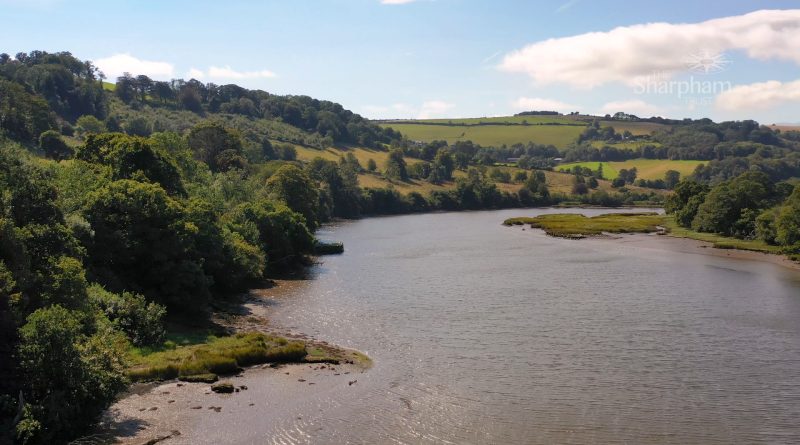
River Dart saltmarsh-restoration receives a £25k funding boost
The Sharpham Trust’s work to restore a disappearing riverside habitat has received £25,000 in funding.
Saltmarshes are critical ecosystems that provide a wide range of benefits to both the environment and local communities. These unique habitats serve as natural buffers, absorbing excess water during floods and reducing the impact of waves during storms. The restoration of saltmarshes not only protects the coastline but also enhances biodiversity.
The South Devon charity’s Sharpham Estate borders the River Dart and the Trust has been repairing stone walls that protect areas of saltmarsh along its banks. Now, thanks to a grant from Devon Environment Foundation that work will continue.
What is saltmarsh and why is it important?
Saltmarshes are essential as they cushion tidal and wave energy, help prevent flooding & erosion, capture carbon, provide habitats for fish, birds and other wildlife and help regulate water quality by absorbing excess phosphates, nitrates and salt in river water.
In addition to their protective benefits, saltmarshes play a vital role in supporting wildlife. They serve as nurseries for various fish species, including mullet and bass, which rely on these areas for shelter and food. Birds, such as the redshank and avocet, use saltmarshes as breeding grounds and feeding areas, making them essential for avian biodiversity.
Saltmarshes store carbon at a rate estimated to be 40 times that of woodland. Yet 85% of England’s saltmarsh has been lost in recent centuries to development and changing land use. More is at risk through rising sea levels and climate change. The alarming statistic regarding the loss of saltmarsh in England highlights the urgency of restoration efforts. With only a fraction of the original saltmarsh remaining, initiatives like the one supported by the Devon Environment Foundation are vital. These efforts not only aim to restore lost habitats but also to educate the public on the importance of these ecosystems.
This project protects 7,850 square metres of saltmarsh, an area which has recently been designated as a County Wildlife Site. That means that it is part of a Devon-wide network of connected green and blue habitats through which wildlife can move. The grant funding will help complete the restoration of traditional dry-stone walls that protect a large area of saltmarsh in front of Sharpham House, three miles downriver from Totnes.
The restoration process involves several stages, including surveying the existing landscape, assessing the health of the saltmarsh, and implementing strategic plans for rebuilding. The use of traditional dry-stone wall techniques is not only environmentally friendly but also preserves the cultural heritage of the area.
Conserving what still exists
Sharpham Trust Director Julian Carnell said: “The Dart has limited areas of saltmarsh remaining and so it is important to retain and conserve what still exists and prevent further deterioration.”
Amanda Keetley, Executive Director of Devon Environment Foundation, commented, “DEF is delighted to enable this area of saltmarsh at Sharpham to be protected. This is an essential first step to restore saltmarsh more widely on the River Dart.”
The funding will enable a local stonewaller Martin Stallard to continue to rebuild collapsed sections of wall – as he began to do in 2024. The stone then and for this new stage of the project is supplied by Dolphin Boatyard at Galmpton Creek on the Dart and transported upriver on a barge by a team from Dart Harbour who are also supporting the project.
Collaboration with local craftsmen is crucial for the success of restoration projects. Martin Stallard, a skilled stonewaller, brings years of experience to the project, ensuring that the walls are rebuilt to withstand the test of time. The involvement of local communities through volunteer opportunities also fosters a sense of ownership and awareness about the importance of saltmarsh conservation.
Large areas of saltmarsh are shown on old 19th-century maps of the river, and the aim is that volunteers will install leaky dams to capture sediment which will gradually allow saltmarsh to return.
Leaky dams are a key component of the restoration strategy. These structures allow water to flow through while capturing sediment, creating the ideal conditions for saltmarsh vegetation to establish. Over time, this natural process can lead to significant habitat recovery, providing a home for diverse species and enhancing overall ecosystem health.
Explore and give online
Support from the public is vital for ongoing conservation efforts. The Crowdfunder initiative not only raises necessary funds but also raises awareness about the importance of protecting saltmarshes. By contributing, donors play a direct role in ensuring the survival of these crucial habitats for future generations.
The funding monies were delivered through Crowdfunder – a South West-based funding platform – and donors can still contribute. Donate at www.crowdfunder.co.uk/p/saltmarsh-protection
Read more & see video about Sharpham Trust’s saltmarsh conservation here:
To further engage with the community, educational programmes and events are being organised to highlight the significance of saltmarsh ecosystems. Workshops and guided tours can help individuals understand the role that saltmarshes play in local ecology and inspire them to take action.
www.sharphamtrust.org/saltmarsh
The restoration of saltmarshes along the River Dart is a critical step in combating biodiversity loss and mitigating climate change impacts. The work being done by the Sharpham Trust and its partners exemplifies how local initiatives can make a significant difference in environmental conservation.