
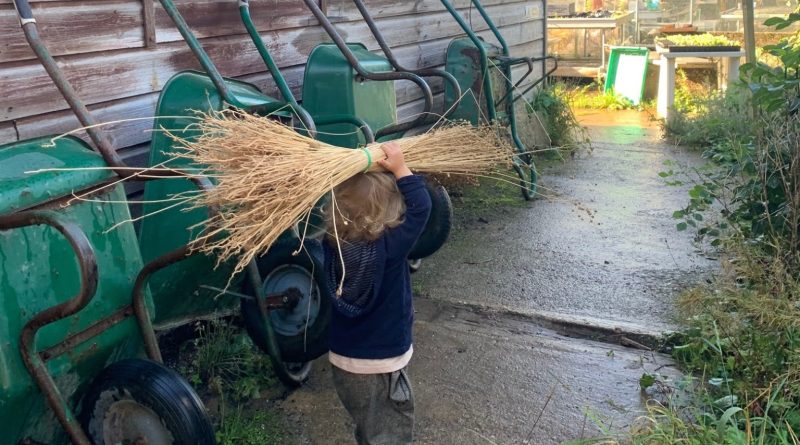
Devon Grows Flax will uncover and revive flax culture throughout the county thanks to Heritage Fund grant
Today, the Devon Grows Flax project, a collaboration between Transition Town Totnes and Liflad CIC, has announced a £116k grant from The National Lottery Heritage Fund to uncover, revive and embed flax culture in Devon.
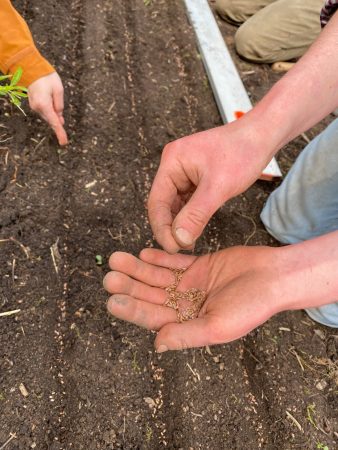
Flax was once commonly grown in Devon and used to make many useful items such as linen cloth, sails, twine, paper and linseed oil. A flax mill operated in Tuckenhay, near Totnes, from the late 1700s to the early 1800s, primarily to meet the demand for linen, sailcloth and yarn for the nearby naval port of Plymouth. However, little of this past is commonly known and its stories are at risk of becoming lost. Flax processing skills and knowledge faded with time, with flax now being on the endangered crafts list.
Helping communities connect to each other and learn heritage skills while experiencing the magic and utility of flax
We know that wool once made Devon wealthy and employed many across the county but what about linen? This lesser known material, made from the flax plant, is the focus of a new and exciting project.
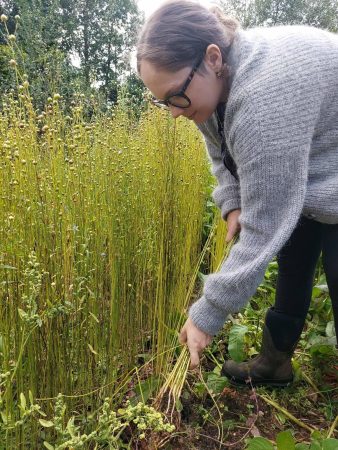
Following a successful Totnes Grows Flax pilot, funding has been awarded to support people of all ages to grow flax in gardens, allotments, schools, and communal land nurturing it from seed to harvest. Community members are invited to join the process to learn about growing flax, yarn making and textile skills and exploring Devon’s heritage.
Devon Grows Flax will:
- Organise events and workshops, including tool making for processing the flax fibre, to spinning sessions where people will collectively create a Devon-made cloth!
- Conduct research into Devon’s flax growers, ‘flax dressers’, spinners and linen weavers and their contribution to the county’s economy and heritage, enabling people to reconnect with long-overlooked stories, recreate flax heritage and celebrate local crafters.
- Work collaboratively with teachers to explore incorporating flax growing and processing in KS1 and KS2 to inform the development of a flax in schools education pack combining flax learning with History, DT and Science.
- An exhibition showcasing past and present flax in Devon will tour the county in 2027 and communities will have an opportunity to celebrate their work with flax.
“I felt instantly engaged when I was handed the seeds!”, Devon Grows Flax participant.
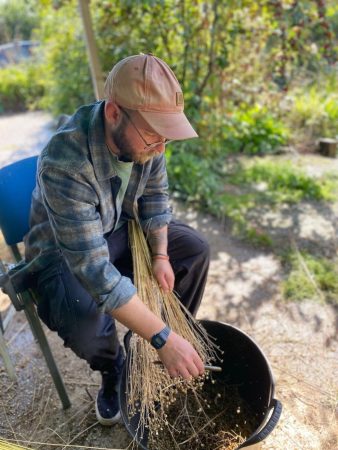
Get involved – Call out for volunteers
- Flax Towns: To enable flax growing across Devon we are looking for volunteer ‘Flax Ambassadors’ interested in being supported to run their own community flax projects. Ambassadors will receive full training in flax processes but must have a keen interest in textiles and/or growing.
- Spinners: A spinning group is being hosted by The Wool Hub CIC in Buckfastleigh, a team of volunteers will be trained how to spin by flax experts Simon Cooper from Flaxland in Stroud and renowned spinner Amanda Hannaford, Truro. The spinning group will spend a year to spin together and create a Devon Linen cloth.
- Researchers: Exploration of the long history of this region’s relationship with flax has already begun with the heritage research team, who are looking for keen volunteers or those with any flax knowledge to join them.
To participate in any of the above see the Transition Town Totnes website.
For more information on upcoming events, volunteering and project news, visit https://www.transitiontowntotnes.org/project-groups/devon-grows-flax.
“I’ve had a wonderful experience with the project being involved in something that feels very important. It’s been a joy to share the experience with many hands who have helped through the process.” Leona, Ambios.
Dr Viktoria Erlacher-Downing, Project Lead & Community Coordinator, says “We are excited to revive knowledge about flax growing and processing in our communities, these skills have all been sharply declining. Doing it in local groups gives the added benefit of nurturing community connections across generations. In the long-term this will also support regenerative fibre production in our area and the wider bio-region and make the flax plant part of our landscape again.”
“Transition Town Totnes’ work focuses on taking positive actions together in a changing world. You might know us from a range of projects that focused on resilience of our local environment, food systems, housing and also our inner resilience that supports us in our wider work. In collaboration with Liflad CIC we are now branching out to explore our resilience when it comes to local fibre and material production through growing flax.”
The Project Manager, Curator & Technical Advisor and Liflad founder Zoe Gilbertson remarks “It’s been over two years since I undertook a Churchill Fellowship train journey across Europe, exploring bioregional resilience and its relationship to flax. Flax is a wonderful plant that can be turned into many useful materials, but most people know it as linen – something we no longer have the knowledge or capacity to manufacture in the UK. During my travels, I researched agriculture, small-scale processing, spinning infrastructure, and textile cooperatives, and connected with projects that prioritise community and the arts over profit”.
“A key learning was that infrastructure and inspiration, when supported by culture and creativity, can bring a seemingly impossible task to life within a region. We want to bring flax back to life in Devon.”
Education & Heritage Co-ordinator and Liflad Delivery Lead, Sophie Scanlon, states “We are excited to co-deliver, with Transition Town Totnes this a multi-year project. Work starts now on community building, heritage research, and skill sharing. We will also include craft-based well-being activities, flax education in schools, creative exhibitions, and the development of a community cloth”.
About Transition Town Totnes
Transition Town Totnes (TTT), co-founded by Rob Hopkins, is a community-led charity that exists to strengthen the local economy, reduce our environmental impact, and build our resilience as we adapt to a changing climate. Transition Town Totnes has a 20 year track record of engaging local communities in high-quality environmental and cultural events and projects, reaching a wide range of people and working in partnership with a range of organisations.
About Liflad
Liflad is a not-for-profit Design Lab, founded by Zoe Gilbertson, developing strategy and practice to enable low energy, local livelihoods. Zoe and her fellow collaborator Sophie Scanlon, work across the South West and the UK. Their current focus is on flax and textiles as a key component of bioregional material development. Liflad develops knowledge, governance and enterprise for agroecological textiles and related materials, current projects include the UK Bast Fibre Network, Flax and Linen Community Europe and Common Cloth Works – manufacturing local linen cloth on a Devon farm.
Further information
For further information, images and interviews please contact Viktoria at Transition Town Totnes on viktoria@transitiontowntotnes.org.